
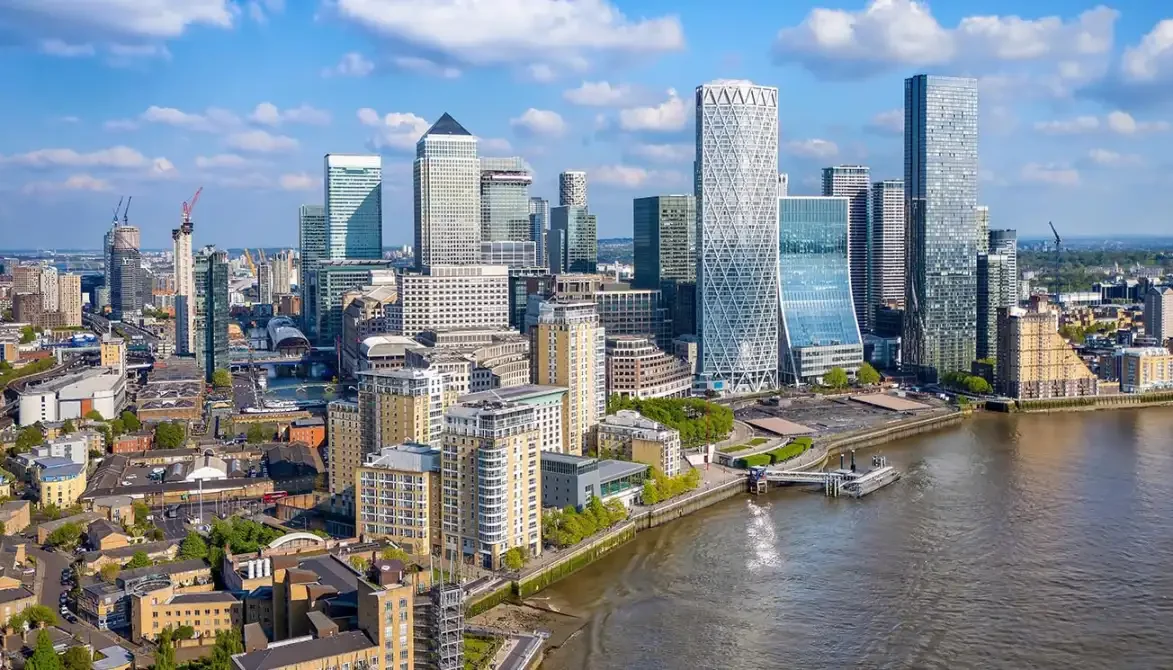

The Transformation of Canary Wharf
Canary Wharf is no longer just a business district that comes alive during working hours. As of 2026, with the completion of large-scale residential developments such as Wood Wharf and the expansion of social amenities, it has evolved into a vibrant 24/7 lifestyle destination. For investors, Canary Wharf stands out with its modern housing stock and strong corporate tenant profile compared to other parts of London.
1. Canary Wharf Property Market in 2026
According to April 2026 data, the E14 postcode—home to Canary Wharf—remains one of London’s most dynamic investment areas.
- Average Property Price: Prices across Canary Wharf range between £475,000 and £550,000. One-bedroom apartments are the most actively traded segment, appealing to both first-time buyers and investors.
- Rental Yield: Canary Wharf outperformed the London average in 2026, offering an impressive average rental yield of 6.6%, with monthly rents reaching approximately £2,600.
2. 4 Reasons Why Investing in Canary Wharf Makes Sense
A. The Elizabeth Line (Crossrail) Effect
The Elizabeth Line has transformed Canary Wharf by connecting it directly to West London and Heathrow Airport. With full operational capacity in 2026, this infrastructure has significantly increased not only accessibility but also the overall desirability of the area. Professionals working in the City of London now increasingly view Canary Wharf as a top residential choice.
B. Strong Corporate Tenant Profile
The area hosts some of the world’s largest banks, tech companies, and law firms. For investors, this means lower vacancy risk and a reliable tenant base with strong payment capacity. Properties in Canary Wharf typically have shorter listing periods than the London average (around 15 weeks).
C. Modern Housing Stock & “Green Premium”
Most buildings in Canary Wharf are newly built and have high energy efficiency ratings (EPC). As energy costs become more important in 2026, properties with EPC ratings of “A” or “B” are easier to rent and incur lower maintenance costs compared to older Victorian homes.
D. Ongoing Regeneration & New Developments
Projects such as North Quay and Wood Wharf Phase 3 are adding not only residential units but also schools, parks, and retail spaces. As these developments are completed, the capital appreciation potential of surrounding properties continues to strengthen.
3. Risks & Considerations
As with any investment, it’s important to consider the downside:
- Service Charges: Luxury developments often come with high annual service fees for amenities such as concierge, gyms, and elevators. This can reduce your net rental yield.
- Oversupply Risk: Due to the high volume of new developments, investors may face competition from similar units. Features like views, balconies, or higher floors can make a significant difference.
4. Investment Returns by Property Type
Which property type performs best in Canary Wharf?
- One-Bedroom Apartments: The most profitable segment for investors. They offer Stamp Duty advantages and are the fastest to rent out.
- Studio Apartments: Typically priced between £345,000 and £400,000, offering an accessible entry point. Ideal for young professionals.
- Luxury Penthouses & 3+ Bedroom Units: More suited for owner-occupiers. While rental yields are lower, they represent long-term prestige investments.
5. Investment Strategy for 2026
When buying property in Canary Wharf:
- Walking Distance: Ensure the property is within 10 minutes of a tube or Elizabeth Line station.
- Building Condition: For resale properties, verify that cladding certifications are up to date.
- Short-Term Rentals: Due to business travel demand, short-term rentals (where permitted) can generate higher returns.
6. Conclusion: The Final Decision
Is buying property in Canary Wharf worth it?
If your goal is a modern, hassle-free investment with strong rental yields and income in GBP, the answer is clearly yes.
The price corrections seen in 2026 provide a more balanced entry point compared to 2024 and 2025. With rental yields exceeding 6% and the long-term value driven by the Elizabeth Line, Canary Wharf continues to stand out as one of London’s smartest investment locations.