
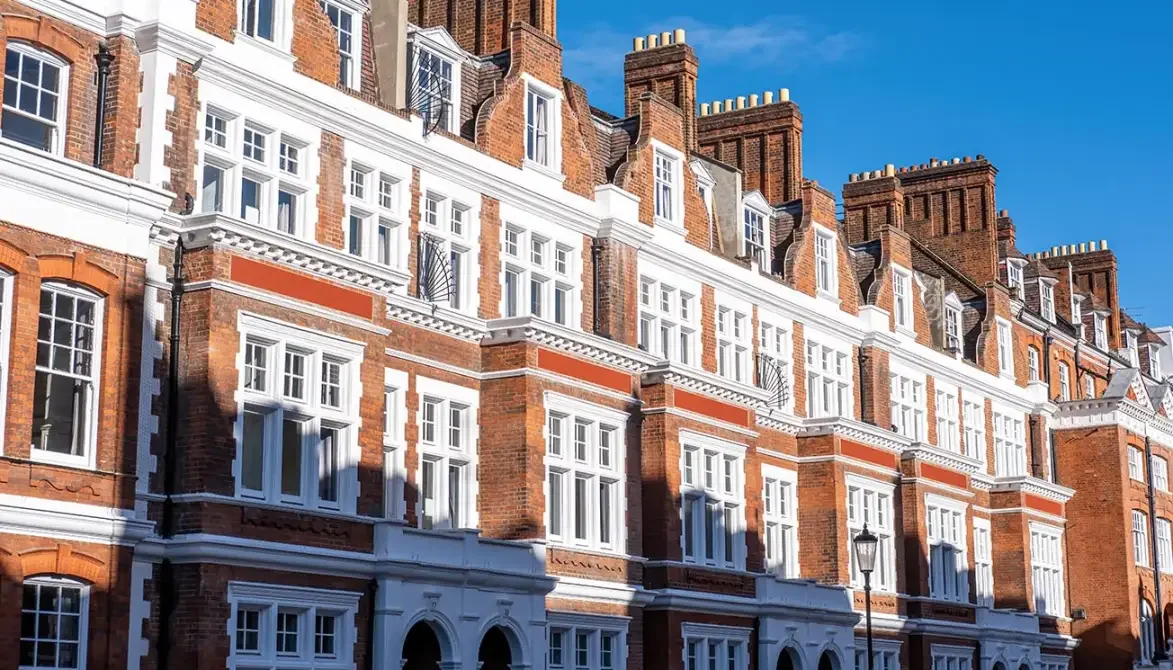

Overview of the London Real Estate Market in 2026
As the global economic hub, London’s real estate market has entered a new phase in 2026. Following the high inflation and interest rate volatility of the past two years, the market has reached a more stable, buyer-oriented balance. Today, owning a home in London is not just about meeting a housing need—it is a sterling-based asset management strategy.
So, what is the state of house prices in London in 2026? Are prices rising, or is the market undergoing a correction? In this guide, we break down the market using the latest data from the Office for National Statistics (ONS) and analyses from major firms such as Savills.
1. Average House Prices in London (2026) & Change Rates
As of the first half of 2026, the average property price in London ranges between £542,000 and £547,000. This figure is significantly higher than the UK average (approximately £290,000).
Annual Price Change
The market is moving “sideways” in 2026. On an annual basis, fluctuations are minimal, ranging between approximately -1.5% and +1%.
- Flats: Due to the continued post-pandemic preference for more spacious living, flat prices have slightly declined. The average price is around £421,000.
- Detached & Semi-Detached Houses: Strong demand for family homes keeps prices resilient. Semi-detached houses have reached an average of approximately £712,000.
2. Regional (Zone-Based) Price Analysis
Given London’s vast geography, average prices do not always reflect reality. Location remains the most critical factor in pricing.
Zone 1 & Zone 2 (Central London)
Areas such as Westminster, Kensington, and Chelsea are dominated by the prime market. Prices typically start from £1.5 million with virtually no upper limit. In 2026, these areas have maintained their value, supported by the return of international investors.
Zone 3 & Zone 4 (Emerging Areas)
These zones are favored by strategic investors.
- Stratford & Greenwich: Offer modern developments and excellent transport links, with prices ranging from £450,000 to £650,000.
- Haringey & Lewisham: More affordable yet rapidly appreciating locations.
Zone 5 & Zone 6 (Outer London)
Located 30–40 minutes from central London, these areas offer larger living spaces in the £350,000–£450,000 range.
3. Key Factors Affecting Prices in 2026
The London housing market is not isolated; it is directly influenced by macroeconomic variables.
Interest Rates & Mortgage Market
The Bank of England’s (BoE) reduction of interest rates to around 3.75%–4% has lowered mortgage costs. This encouraged buyers who had been waiting in 2025 to enter the market in 2026, preventing sharp price declines.
Supply-Demand Imbalance
London continues to face a chronic housing supply shortage. Annual migration and new household formation exceed current housing production. This supply shortage naturally supports price levels.
Energy Efficiency & “Green Premium”
In 2026, EPC (Energy Performance Certificate) ratings are more important than ever. Properties rated C or above command higher prices (approximately 5–10% more) due to lower operating costs.
4. Price Analysis by Property Type & Performance
Each property type in London caters to different investor profiles and budgets. Based on 2026 data:
- Detached Houses: The most prestigious and rare property type, with average prices around £1,140,000. This segment has shown the most stability, with only a slight annual change of around +0.6%.
- Semi-Detached Houses: A favorite among families and mid-to-upper segment investors, averaging £712,000. This category performed the best in 2026, with a 0.9% increase, driven by continued demand for homes with gardens.
- Terraced Houses: Reflecting London’s iconic architecture, these average £628,000. Prices have seen a slight correction of around -1.0%, but remain highly liquid investment options due to central locations and renovation potential.
- Flats & Maisonettes: The most accessible option for first-time buyers and rental investors, averaging around £421,000. Due to changing lifestyle preferences and high service charges, this segment has experienced a 6.1% annual price adjustment—creating a strong entry opportunity for lower-budget investors.
5. Investment Strategies for 2026
Expert recommendations for those considering buying property in London:
- Opportunity Window for First-Time Buyers: Stable prices and improved mortgage rates make 2026 an ideal year for first-time buyers, especially at entry levels around £463,000.
- Focus on Renovation Projects: Buying and modernizing older properties offers some of the highest profit margins in the 2026 market.
- High Rental Yield Areas: Locations such as Barking and Dagenham remain attractive for cash-flow-focused investors due to lower entry prices and strong rental returns.
6. Future Outlook: 2027–2030 Projections
According to market experts and Savills Research, 2026 is a “preparation year.”
- From 2027 onwards: With further normalization of interest rates, prices are expected to grow annually by around 4–5%.
- Cumulative Growth: The London market is projected to achieve total growth between 13.6% and 20% by 2030.
This indicates that buyers entering the market in 2026 are likely to benefit from both rental income and capital appreciation over a 5-year horizon.
Conclusion: Is 2026 a Good Time to Buy in London?
In 2026, London house prices are progressing on a healthier and more sustainable trajectory compared to the aggressive growth of previous years. If your goal is not short-term speculation but rather a secure, sterling-based investment with long-term capital appreciation, the 2026 market presents compelling buying opportunities.
Remember: The most important rule in the London property market is not trying to time the market—but believing in the power of time spent in the market.